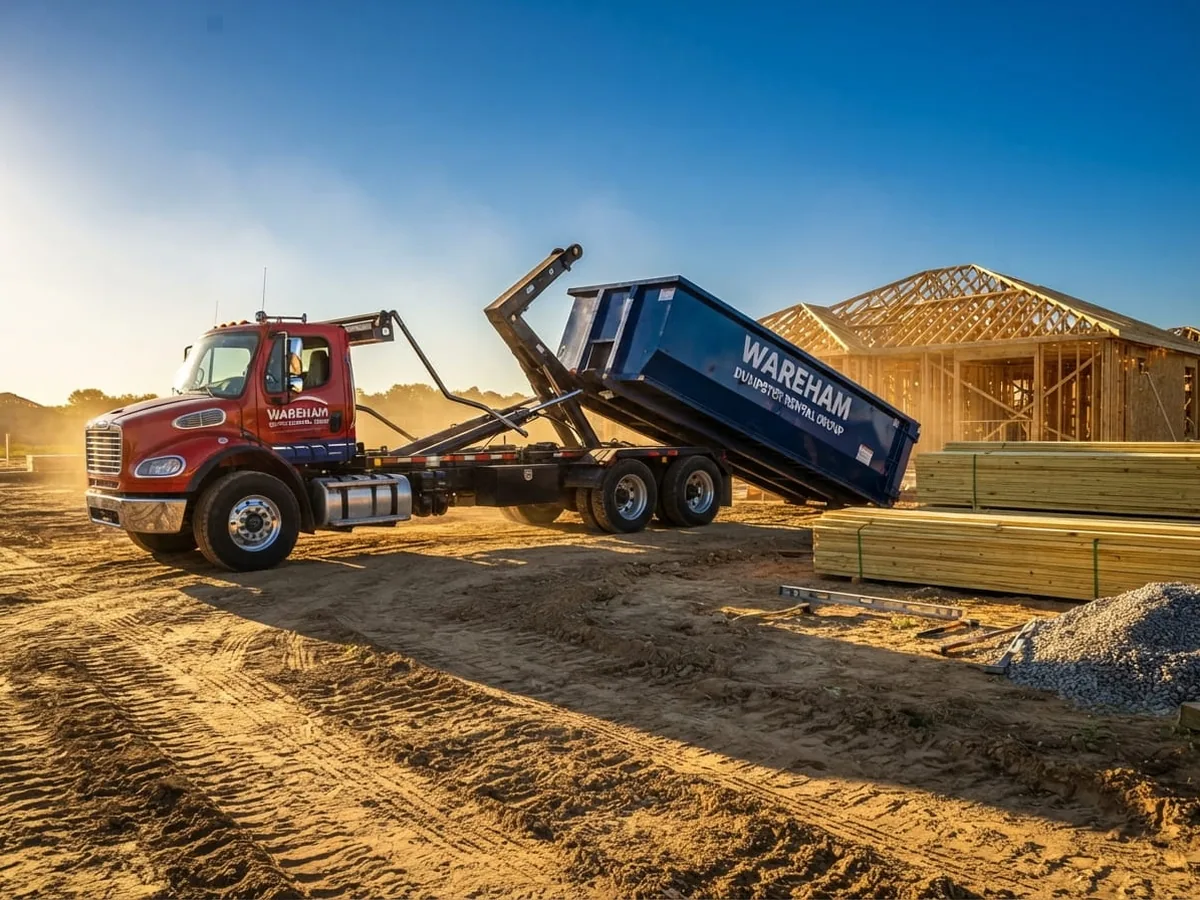
A Phase-by-Phase New Construction Dumpster Guide for Wareham
How Wareham-area builders size and time dumpsters across site prep, framing, roofing and interior finish, including Massachusetts's gypsum disposal rule.
ReadWinter Storm Guide
A practical guide for Wareham-area homeowners clearing downed limbs, roof and gutter debris after a hurricane, tropical system or nor'easter, plus permit basics for the Cape.

Wareham sits at the head of Buzzards Bay. The climate here is coastal and Atlantic-moderated — milder winters than inland Massachusetts, but a coast fully exposed to hurricanes and tropical systems in late summer and fall and to nor'easters through the winter, each capable of driving wind and rain and bringing down limbs. A nor'easter moving through the Wareham area doesn't just leave snow behind. It leaves broken limbs, damaged gutters, torn roofing, and downed fencing that has to be cleared before the next storm stacks more on top of it. This guide covers what actually fills a dumpster after a bad coastal storm here, how to size one for the job, and how placement works once the driveway and street are both covered after a storm.
A lot of the damage from a Wareham-area nor'easter doesn't come from the snow total alone — it comes from the weight of it. Heavy, wet snow, the kind that tends to fall during the warmer edge of a nor'easter or during a late-season storm, packs far more weight per inch onto tree limbs and roof structures than the light, dry powder that falls during a deep-cold stretch. Add wind gusts on top of a wet, heavy snowfall and it's a reliable recipe for cracked branches, entire limbs coming down across driveways and yards, and stress on gutters and roof edges that are already carrying ice. Older trees and anything with a weak limb union tend to go first, which is why storm debris often shows up in clusters — one bad tree, several downed limbs, and a yard that needs clearing before spring cleanup can even start.
The debris that follows a bad coastal storm in the Wareham area is usually a mix of a few predictable categories: downed tree limbs and sometimes whole small trees, damaged or torn-loose gutters and downspouts, wind-lifted shingles or roofing pieces, cracked or collapsed fencing, and storm-damaged sheds or outbuildings. None of it is particularly heavy per square foot compared to concrete or roofing tear-off, but it takes up real volume — a modest pile of storm-broken branches looks small stacked on the ground and fills a container faster than most people expect once it's actually loaded.
Because storm debris is a volume problem more than a weight problem, sizing usually comes down to how much yard and roofline damage you're actually dealing with. A single tree's worth of downed limbs, or gutter and minor roof debris from one storm, often fits comfortably in a 10 or 15 yard container. A yard with multiple downed limbs, a damaged shed, and torn gutters — the kind of aftermath a strong nor'easter can leave across a whole property — is more often a 20 yard job. If the same storm also caused roof damage that needs a partial tear-off and re-roof, that's usually worth pricing as its own container rather than trying to combine storm debris and roofing waste in one box.
Massachusetts has a statewide waste disposal ban that keeps a specific list of materials out of regular trash and landfill disposal, and leaves and yard waste are on that list. Downed limbs and storm brush fall into that same category. In practice this means storm debris needs to be handled through a container and disposal route built for it, rather than stacked at the curb with household trash, and it's part of why we route clean yard debris toward recovery whenever the local facilities allow it rather than sending it straight to a landfill. If your cleanup is mixed — branches alongside damaged fencing, gutters, and general yard junk — that's still fine in one container; just say so when you book so the load gets handled correctly on the back end.
Snow changes where a container can actually sit. A driveway that's been plowed and has clear ground underneath usually works fine and, kept entirely on private property, generally doesn't need a permit. If snowbanks have narrowed the driveway or a container needs to sit on the street instead, the Town of Wareham requires a fire-district permit for any container larger than six cubic yards, from the fire district that covers the address — worth a call ahead of a storm cleanup rather than after the truck is already loaded. Dumpster permits here are a town matter, not a county one, so there's no county permit office to route through; each of the surrounding towns we serve — Bourne, Buzzards Bay, Marion, Mattapoisett, Rochester, Carver, Plymouth and Middleborough — handles right-of-way placement through its own Select Board office or Department of Public Works, so it's worth a quick call to that town if your driveway can't take the container.
Storm cleanup doesn't usually wait for a convenient week. Once a nor'easter has passed and roads are clear enough for a delivery truck, most Wareham-area orders placed before midday can still go out the same day, and we'll be honest up front if a farther town in the service area is more realistically a next-day delivery once the storm has snarled local roads. If a downed limb is blocking a driveway or damaging a structure, say so when you call — that changes how urgently a delivery gets scheduled.
A bad nor'easter is stressful enough without wondering where the debris is supposed to go. Sizing the container for the damage in front of you, and being upfront about driveway or street placement, keeps the cleanup moving instead of adding one more thing to sort out after the storm.
Talk to a real person
Call (774) 355-5829 and describe the job. Flat price, stated tonnage allowance, and a delivery window on the same call.
Mon–Sat 7:00am – 7:00pm
From this guide
Wareham sits on a Buzzards Bay coast with a coastal, storm-exposed climate — hurricanes and tropical systems in late summer and fall, and nor'easters through the winter.
Most single-tree or minor storm cleanups fit in a 10 or 15 yard container. A yard with multiple downed limbs, damaged fencing, and torn gutters from a stronger nor'easter is more often a 20 yard job, since storm debris fills by volume rather than weight.
No. Massachusetts's statewide waste disposal ban keeps leaves and yard waste out of regular trash and landfill disposal, and downed limbs and storm brush fall into that same category, so they need to go through a container and disposal route built for yard debris.
Not if the container stays on your driveway, which is private property. If snow has narrowed the driveway and the container needs to sit on the street, Wareham requires a dumpster permit through your fire district's Public Works and Engineering Division. The surrounding towns each handle this through their own Select Board office or DPW.
Most orders called in before midday still go out the same day once roads are clear enough for delivery. If a downed limb is blocking access or has caused damage, tell us when you call — that changes how the delivery gets prioritized.
Keep reading
How Wareham-area builders size and time dumpsters across site prep, framing, roofing and interior finish, including Massachusetts's gypsum disposal rule.
ReadA practical checklist for sizing, placing and timing a dumpster around a Wareham re-roof, including real the Wareham area weather and permit considerations.
ReadA no-pressure guide for Wareham-area families clearing a home after a loss or a move, covering sizing, sorting, Massachusetts's mattress rule, and permits.
Read